

E-Bike Range Estimation from Battery Capacity and Controller Current (A Simple First-Order Model)
If we simplify e-bike range estimation to just two variables—battery capacity (Ah) and controller output current (A)—we can quickly approximate runtime and range. This first-order model helps you sanity-check marketing claims before factoring in real-world variables.
A Simple First-Order Model: Ah ÷ A = Hours
Battery capacity in amp-hours (Ah) divided by average current draw (A) gives an estimated runtime in hours (h):
Runtime (h) ≈ Capacity (Ah) ÷ Current (A)
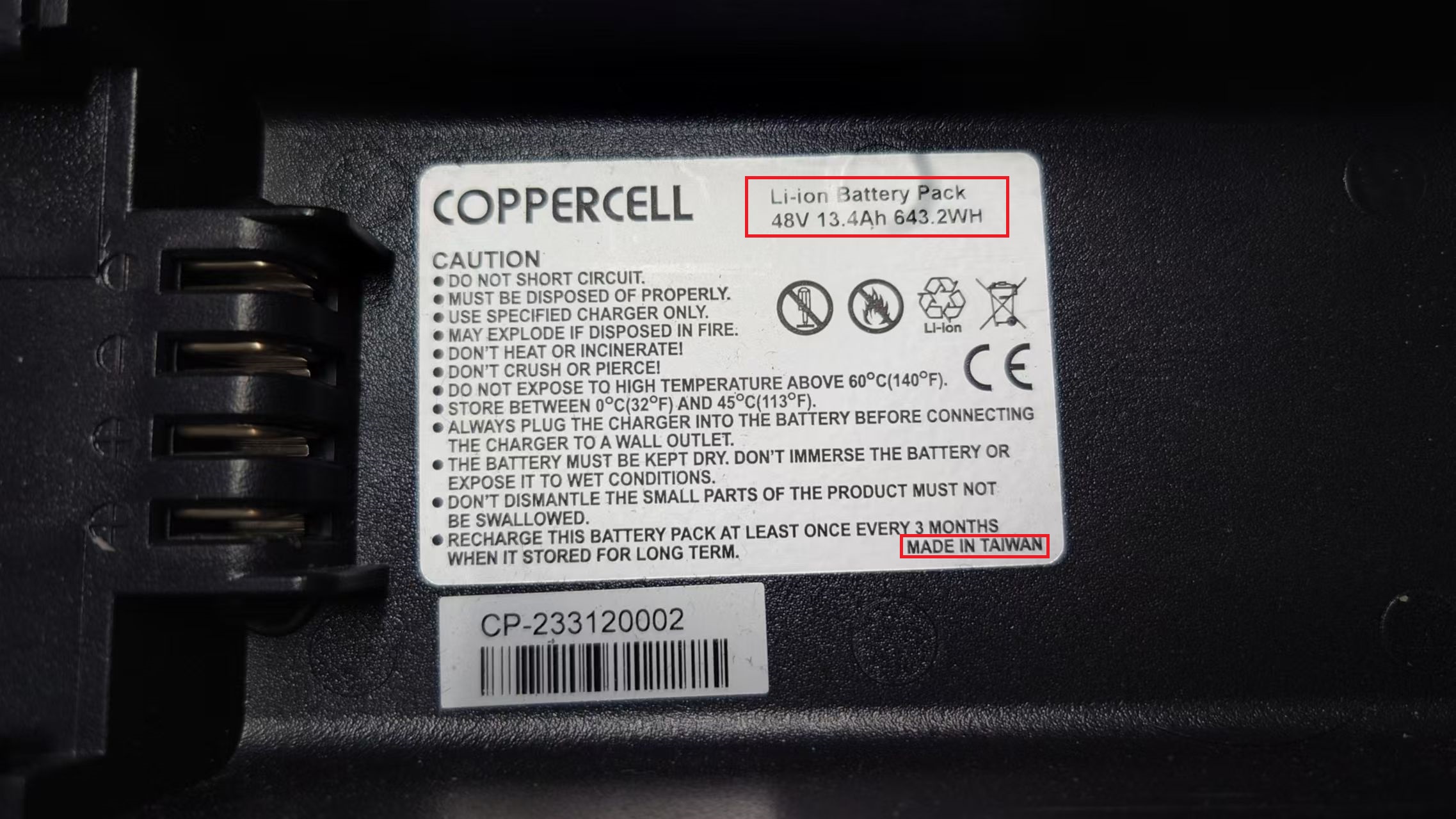
Worked Example: 13.4 Ah Battery with 12 A Current
Assume a 13.4 Ah battery and a constant 12 A current draw during assisted riding. Estimated runtime is:
13.4 Ah ÷ 12 A = 1.12 hours
If assistance cuts off at 25 km/h, the simplified range estimate becomes:
25 km/h × 1.12 h ≈ 28 km
So under these assumptions, a 13.4 Ah battery can deliver roughly 28 km of assisted range.
Suggested internal link sentence
If you are specifying a system target, battery selection and integration assumptions matter—see our Battery Packs overview for pack-level integration considerations.
What Happens If the Speed Limit Is Removed?
If the system is de-restricted and assistance continues beyond 25 km/h, average power demand typically increases. Under the same battery capacity, range will usually drop below the simplified estimate because higher speed and higher load push current draw upward.
Sanity-Checking 100–120 km Range Claims
If a product claims 120 km of range at a 25 km/h cutoff, the implied runtime is:
120 km ÷ 25 km/h = 4.8 hours
With a 13.4 Ah battery, the implied average current becomes:
13.4 Ah ÷ 4.8 h ≈ 2.8 A
This means achieving 120 km would require the system to average around 2.8 A or less, assuming other factors are ignored. In practice, that usually implies very light assist, low load, flat terrain, and a highly efficient setup.
If You Don’t Change Settings, Rider Input Is the Only “Free” Range
Without changing system settings, the main way to extend range is to reduce assist demand by contributing more rider power. Maintaining cadence and riding behavior that lowers average current draw can materially increase distance, especially when assist levels are used conservatively.
Why Real-World Range Varies: What Engineers Must Validate
The model above is intentionally simplified. Real-world range depends on a system-level interaction of motor efficiency, controller behavior, battery characteristics, and the intended use case.
- Motor efficiency across the operating region
- Cell and pack behavior under load (voltage sag, usable capacity)
- Use case (hills, stop-and-go, cargo loads)
- Sensor selection and control behavior (cadence/torque sensing)
- Controller tuning and parameter alignment
- Environmental conditions (temperature, wind) and tire pressure
For example, if controller-to-motor phase parameters are not properly tuned, the motor may operate in a low-efficiency region for much of the ride. The wasted energy turns into heat and unnecessary battery depletion—exactly the kind of issue that must be validated and corrected through iterative testing and tuning.
Suggested internal link sentence
For OEM projects, these variables should be captured as a measurable validation plan—see Validation & Testing for how we structure evidence-based verification.
Practical Tip: Ask for Current per Assist Level
When buying a new e-bike, ask the seller one simple question:
“What is the controller output current for each assist level?”
With those numbers, you can quickly estimate realistic runtime and range using the method above and avoid unrealistic expectations.
Suggested internal link sentence
If you need help translating duty cycle assumptions into controller limits, tuning, and interface definition, our System Integration service covers end-to-end integration planning.
CTA
If you’re building or tuning an e-bike power system and need a range target backed by measurable assumptions (duty cycle, current limits, efficiency, and validation criteria), Veloroof can support system-level integration and validation planning. Contact us to align requirements with evidence-based deliverables.