
USB-PD 3.1 (48V/240W) + BMS Integration: From PVT to Program-Ready Deliverables
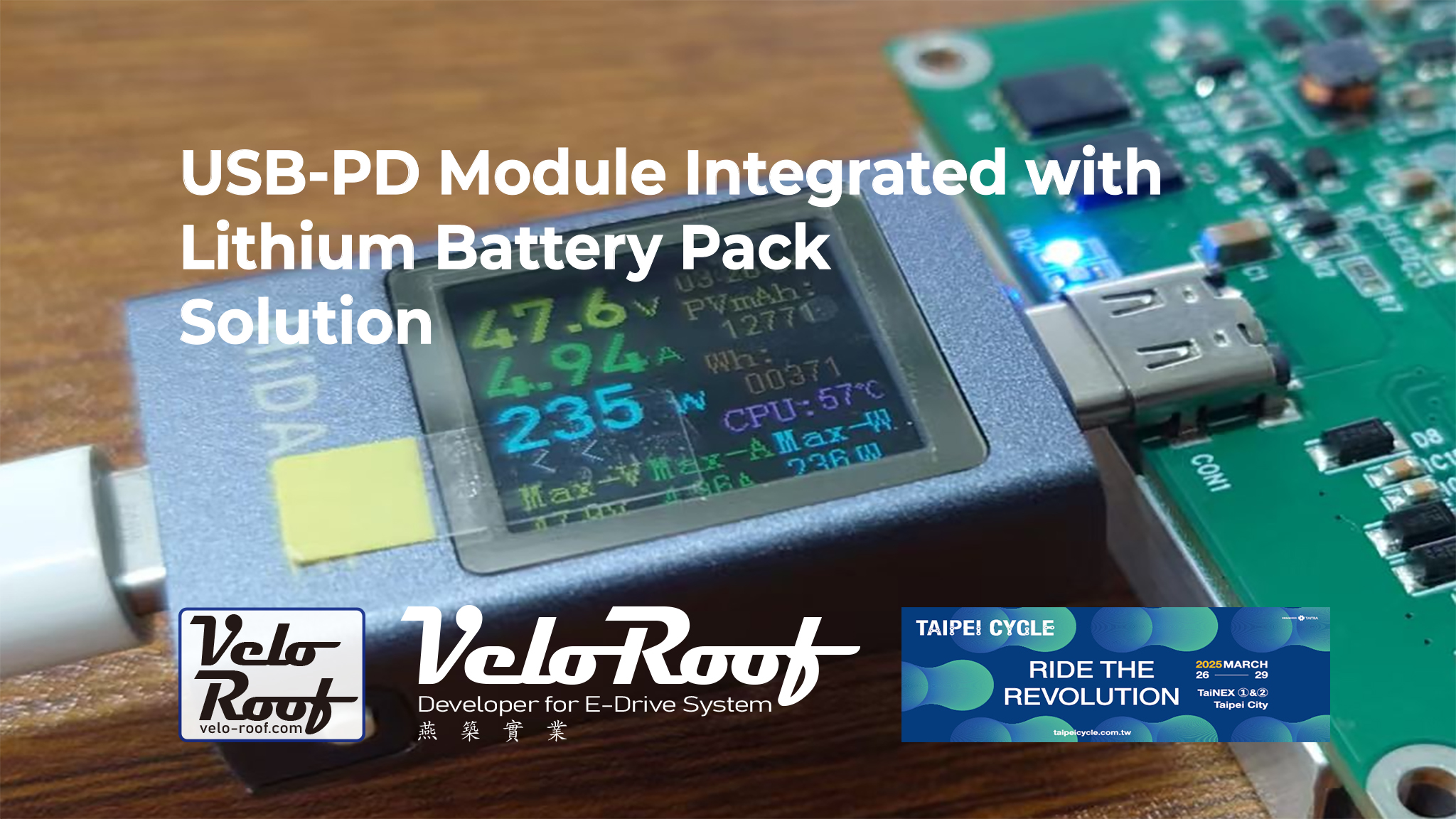
As demand grows for USB-PD 3.1 240W and BMS integration in lithium battery packs, Veloroof is packaging a program-ready integration path—hardware, firmware interfaces, diagnostics, and validation evidence—so OEM teams can execute rather than experiment. USB Power Delivery Revision 3.1 (EPR) expands USB-C power up to 240W (48V, 5A), enabling new system architectures for mobility and energy storage platforms.
What changed with USB-PD 3.1 (EPR)
USB-PD 3.1 introduces the Extended Power Range (EPR)—raising the ceiling from 100W (PD3.0) to 240W over USB-C. This matters because it turns USB-C from “charging convenience” into a legitimate system-level power interface.
Our current status
- PD3.0 solution is in PVT for production readiness.
- We have acquired a PD3.1 48V/240W bidirectional module and started integration validation with our BMS stack.
Bidirectional power flow (why 48V/240W is different)
A bidirectional PD3.1 interface can operate as sink/source/DRP (program-defined), enabling:
- 48V system → USB-PD voltages (e.g., 5V/9V/12V/15V/20V, program-defined) for devices and accessories
- USB-PD source → 48V system charging under controlled protection boundaries
- Deterministic transitions and safe fallback states during negotiation and fault scenarios
Why OEM programs care (mobility + energy storage)
This capability is relevant across:
- Mobility: e-bikes / LEV platforms needing a high-power service or charging interface
- Energy storage: ESS/UPS/BBU programs needing standardized power interfaces and diagnostics visibility
- Charging infrastructure: program-defined integration for PD-based chargers/adapters
What we validated (what we observed, without over-claiming)
What we validated (what we observed, without over-claiming)
- Output stability under defined load profiles
- BMS communication responsiveness (program-defined interface)
- Charging efficiency behavior under controlled conditions
- Evidence collection for next-step validation (issue log + closure tracking)
What we deliver (integration-ready artifacts)
We don’t sell “fast charging” adjectives. We deliver artifacts you can execute:
- Responsibility matrix: PD interface vs BMS vs main power path (limits / derating / fault ownership)
- Interface definition: signals, state transitions, diagnostics/event log fields (program-defined)
- Validation evidence package: test plan, pass/fail summary, issue log, closure tracking
- Production handoff: EOL checks, traceability fields, release notes (program-defined)
Next steps
Next, we will:
- Expand validation across more operating conditions (thermal envelope, cable/connector assumptions, edge-case recovery)
- Optimize stability for bidirectional operation and role switching (program-defined)
- Evaluate integration paths into mobility platforms and energy storage systems to improve program competitiveness
CTA
If your program needs 48V/240W bidirectional USB-PD integration with a BMS and production handoff discipline: